

System Introduction
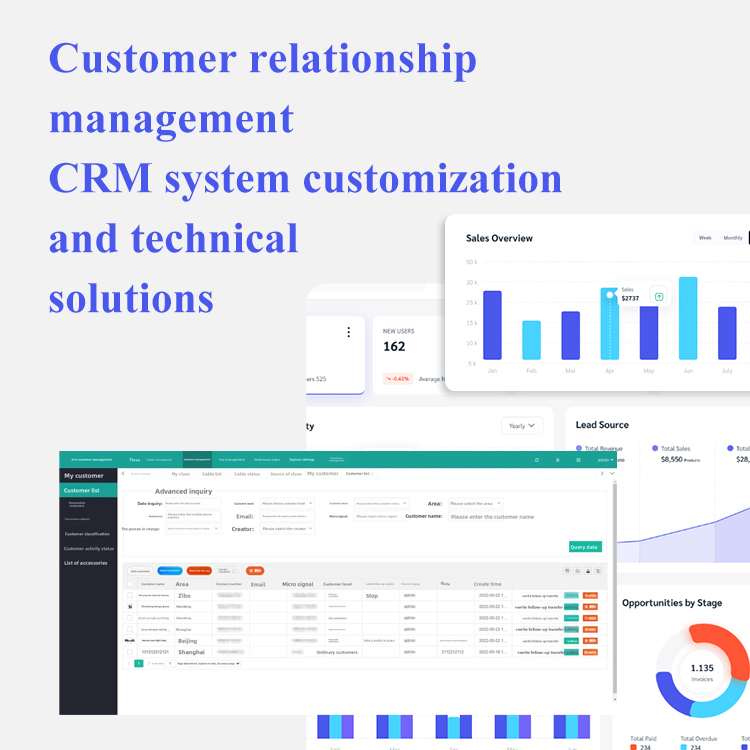
Customer Relationship Management (CRM) systems are designed for small and medium-sized enterprises as well as growth oriented businesses, particularly suitable for sales driven industries; It revolves around the entire business chain of "lead customer business opportunity contract payment invoice", integrating functions such as lead management, customer maintenance, business opportunity follow-up, contract fulfillment, financial control, and product management. Business standardization needs to be achieved through modules such as classification configuration and approval process. Its core is to connect scattered business links, activate customer resources, standardize operation processes, and help enterprises achieve full process visualization management from potential customers to transaction loops, improve business efficiency, and control business risks.
Main Feature List(customizable solutions)
| Main Feature List | functional module |
|---|---|
| Main Feature List | Home |
| Customermanagement | |
| Contact | |
| BusinessOpport | |
| Leads | |
| Contract | |
| Invoice | |
| Workflow | |
| ProductManagement | |
| Store Product |
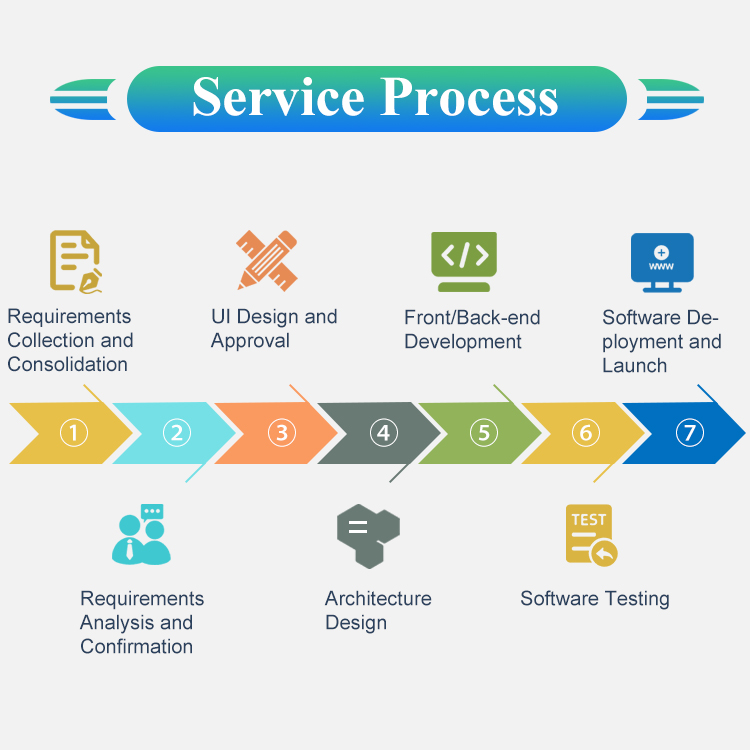
Service process
Requirements Gathering and Consolidation
Requirements Analysis and Confirmation
UI Design and Confirmation
Architecture Design
Front-end and Back-end Development
Software Testing
Software Deployment and Launch
Application Scenarios
1.Digitization of the entire sales process: The system builds a digital sales system around "business opportunities", covering the entire chain from lead cultivation to signing and closing deals. Salespeople can drive business opportunities in a structured manner, while management can monitor performance progress and forecasts in real-time through a visual funnel, accurately identify bottlenecks, and optimize resource allocation.
2.Fine tuned operation of customer assets: With the help of the "customer/contact" center, a dynamically updated customer panorama portrait is constructed to precipitate key decision-makers' information, interaction history, and service preferences. Support personalized communication and continuous relationship maintenance, empower teams to achieve precise services, enhance customer loyalty and lifecycle value.
3.Seamless integration of business and finance: Through the "contract → invoice" process, the business and financial systems are connected, realizing the full chain route from electronic signing, automatic document review to invoicing and payment collection. While improving collaboration efficiency, strengthen compliance control and prevent financial risks.
4.Business process automation collaboration: Based on a configurable "workflow" engine, key nodes such as quotations, contracts, and deliveries are standardized and automated, reducing manual intervention and cross departmental friction, ensuring process standardization, traceability, and efficient collaboration.
5.Intelligent linkage between products and sales: relying on the central "product management" database, maintain unified product information, specifications, and pricing strategies. The sales end can access accurate data in real-time to generate customized solutions, ensuring professional and consistent pricing; The management can analyze product performance based on sales feedback and drive product strategy optimization.
our advantages
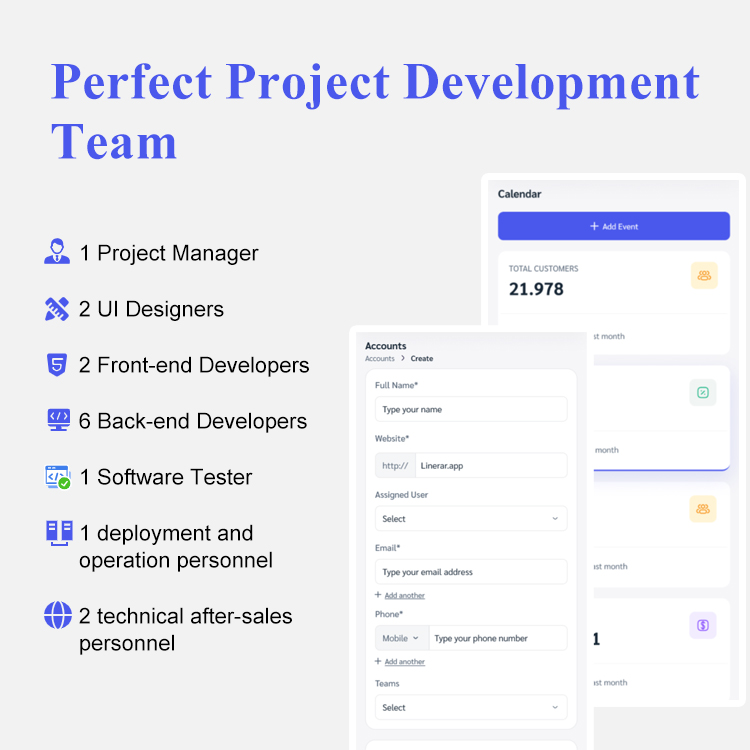
The perfect project development team includes: 1 project manager, 2 UI designers, 2 front-end developers, 6 back-end developers, 1 software tester, 1 deployment and operation staff, and 2 technical after-sales personnel.
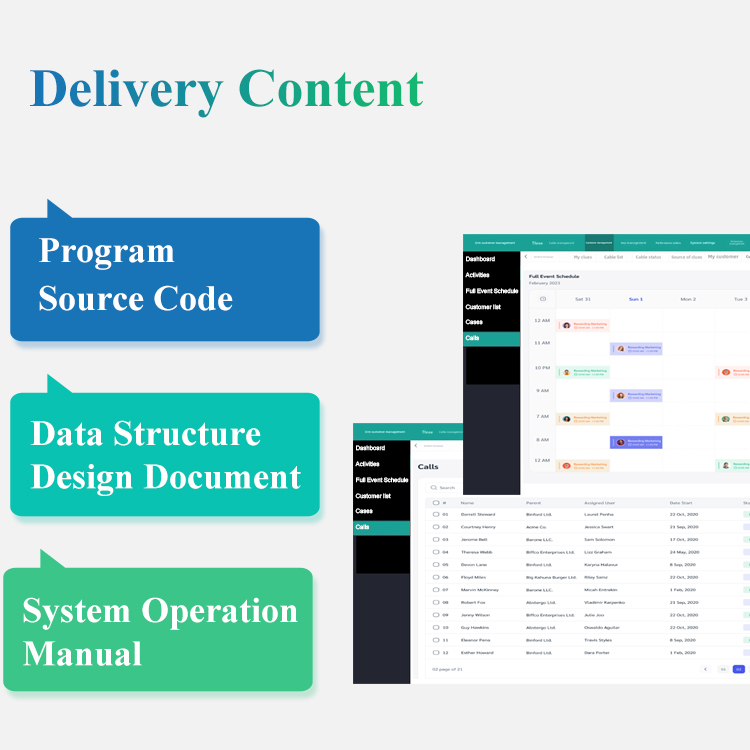
Delivery of the content
1.Source code of the program
2.Data structure design document
3.System operating instructions
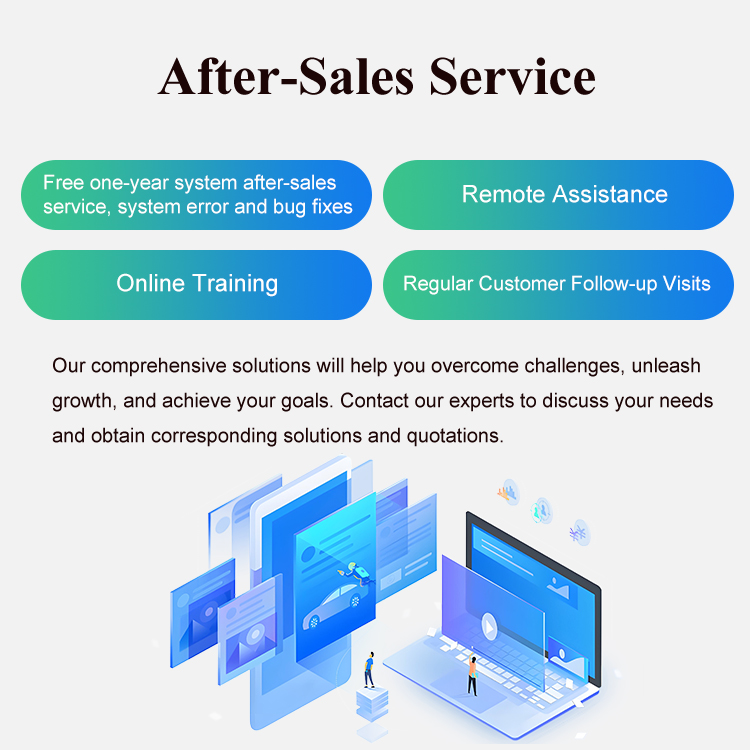
after-sale service
1.Free system after-sales service for one year, system error and BUG repair
2.remote assistance
3.on-line training
4.Regular customer return visits
Our comprehensive solutions will help you overcome challenges, unleash growth, and achieve your goals. Contact our experts to discuss your needs and get tailored solutions and quotes.